
Consumer Unit Upgrade
Tottenham Hale
Old fuse box, repeated tripping or not enough modern protection in Tottenham Hale? We test the existing circuits first and tailor the board design to high-density access planning and apartment circuit schedules, explaining any faults before replacement.
NICEIC Registered Electrician · 15+ Years Experience · Full BS 7671 Certification · 5-Star Rated on Google
Your Fuse Box Upgrade Worries Answered in Tottenham Hale
Worried about mess, losing power, how the new unit will look or unexpected extras? Here is what we check and agree before installation.
Will replacing my fuse box make a mess in my home?
We protect the area around the existing fuse box and keep the work centred there wherever possible. If new cables, casing or access work is needed, we show you where it will go and agree it before starting, so you know what will be visible and what making-good is included.
Will I be left without power for days?
The electricity must be switched off while the old board is removed and the new one is connected and tested. We usually aim to complete the main replacement work and restore power within 3–4 hours. If testing finds a fault that prevents safe reconnection, we explain it before carrying out any additional work.
What will the new fuse box look like?
Before work starts, we explain the likely size and position of the new metal consumer unit. The circuits are clearly labelled, and if a larger enclosure, cupboard alteration or visible cable casing may be needed, we agree the appearance with you first.
What happens if testing finds an existing fault?
Pre-change testing can reveal a fault that the old fuse box did not show. If that happens, we explain the problem and its effect before carrying out extra work. The quotation keeps any additional repair separate and states the testing, certification and Building Control notification included where applicable.
A Hale Village Flat — Developer Dual-RCD at the Spare-Way Limit
Tottenham Hale properties do not all present the same electrical layout. The survey separates Victorian & Edwardian Terraces from 1930s–1960s Semis & Council Properties before the work is specified.
That distinction guides access, circuit testing and the written consumer unit replacement scope without relying on unsupported assumptions about the address.
I replaced it with a 16-way full-RCBO board: dedicated future high-load equipment way (Type B RCBO for the charger's DC-fault behaviour), spare ways for the heat pump, Type 2 SPD on the main bus, and a labelled circuit schedule for the managing agent.
EIC and freeholder consent pack submitted to the block management in one PDF.
What Our Customers Say About Us
Real reviews from homeowners and landlords across Tottenham Hale and the wider London Borough of Haringey. Live Google reviews below — for all reviews across platforms, see our testimonials page →
Our Fuse Box / Consumer Unit Installations
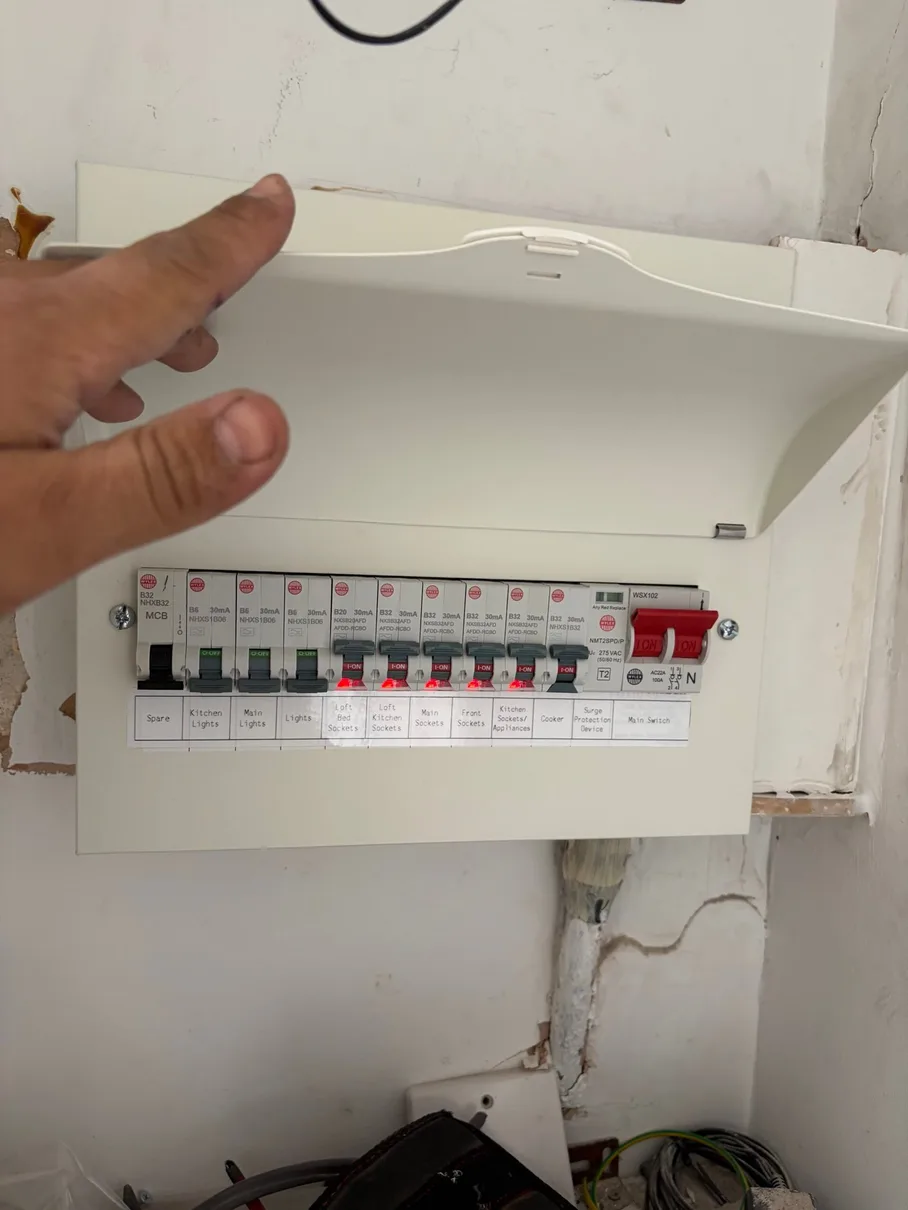
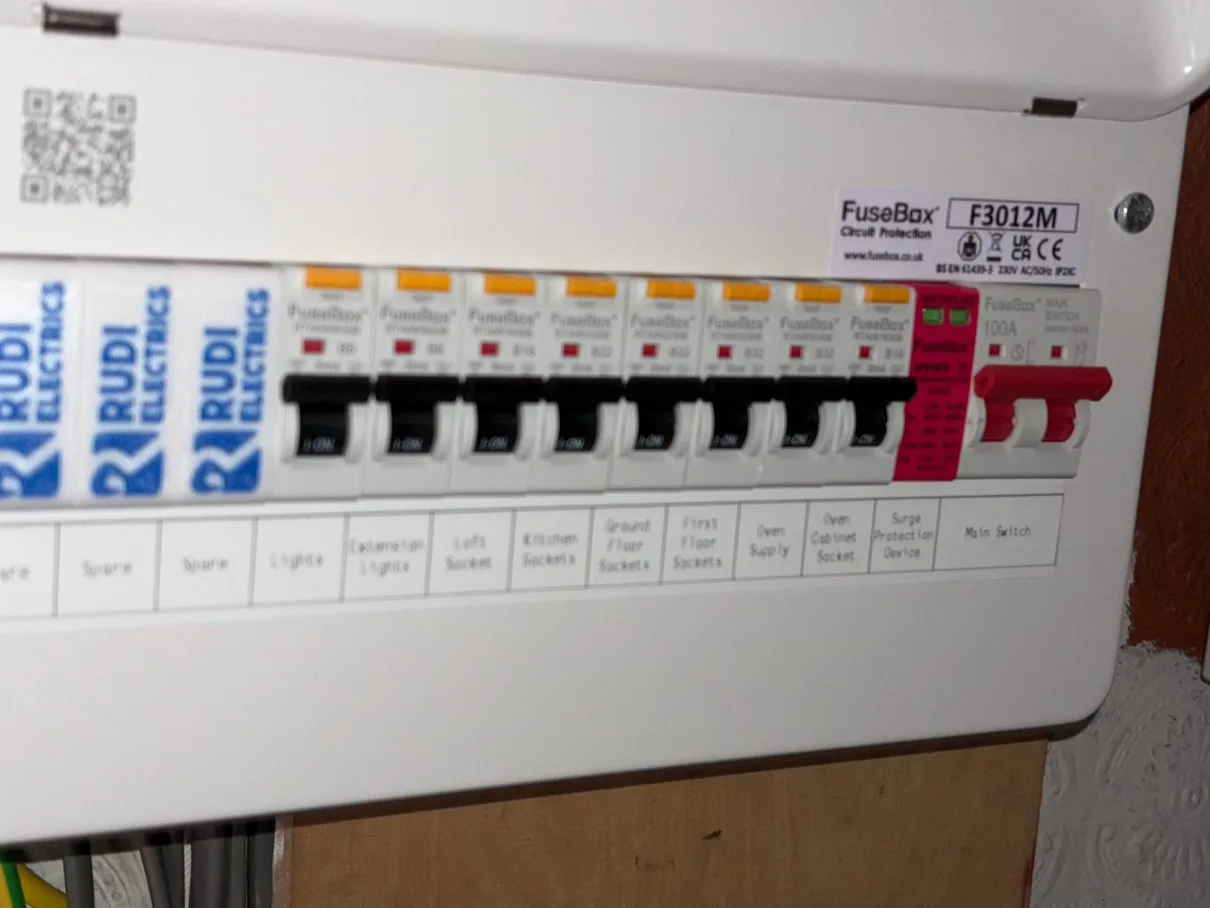
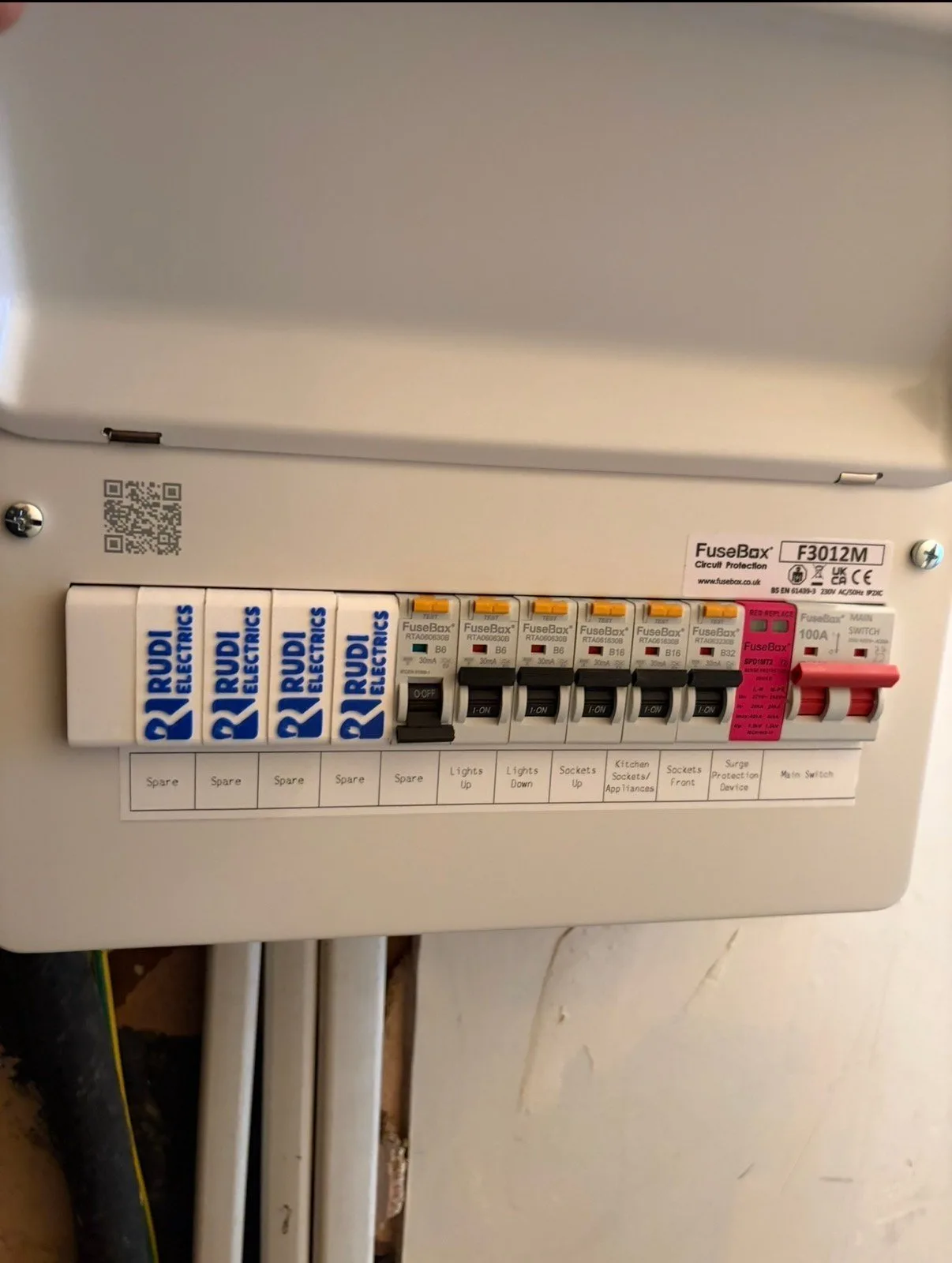
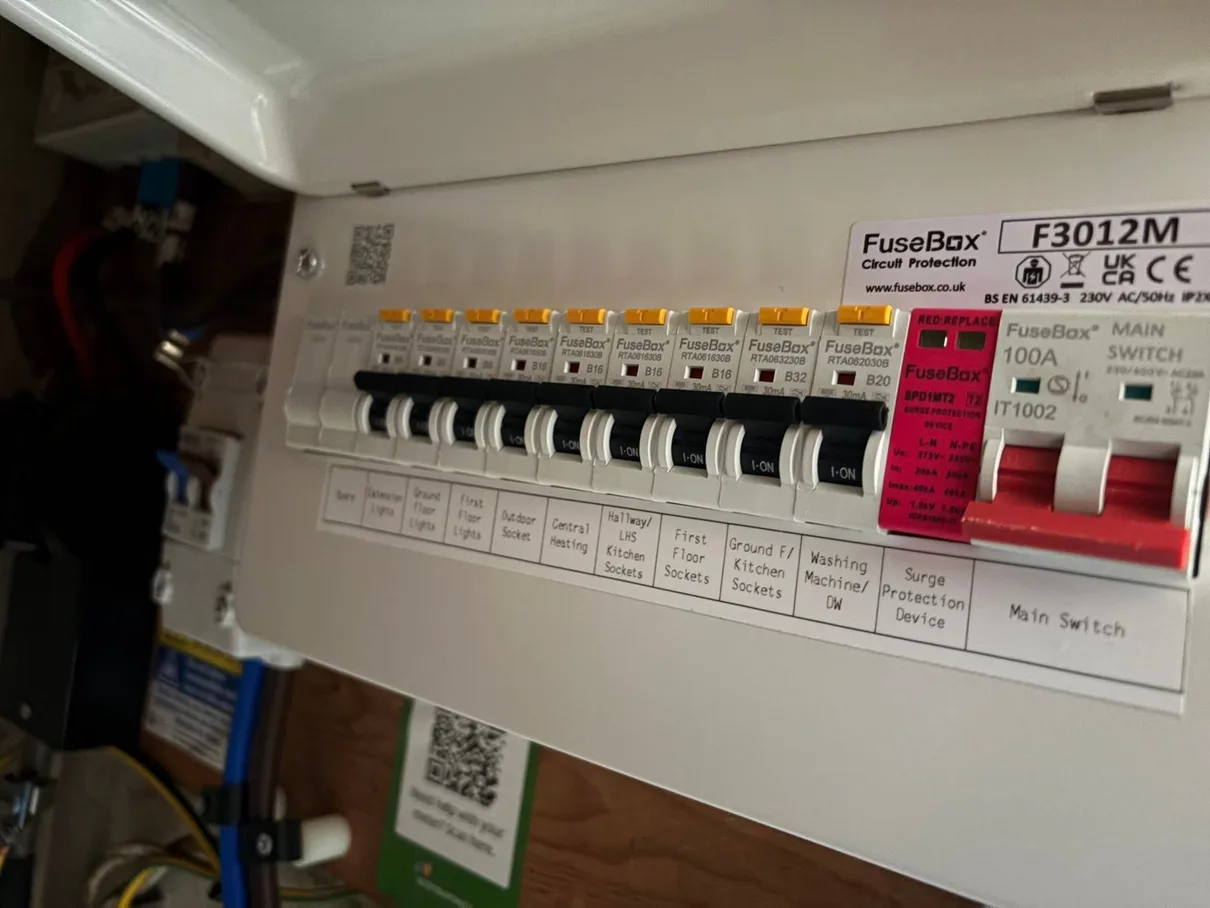
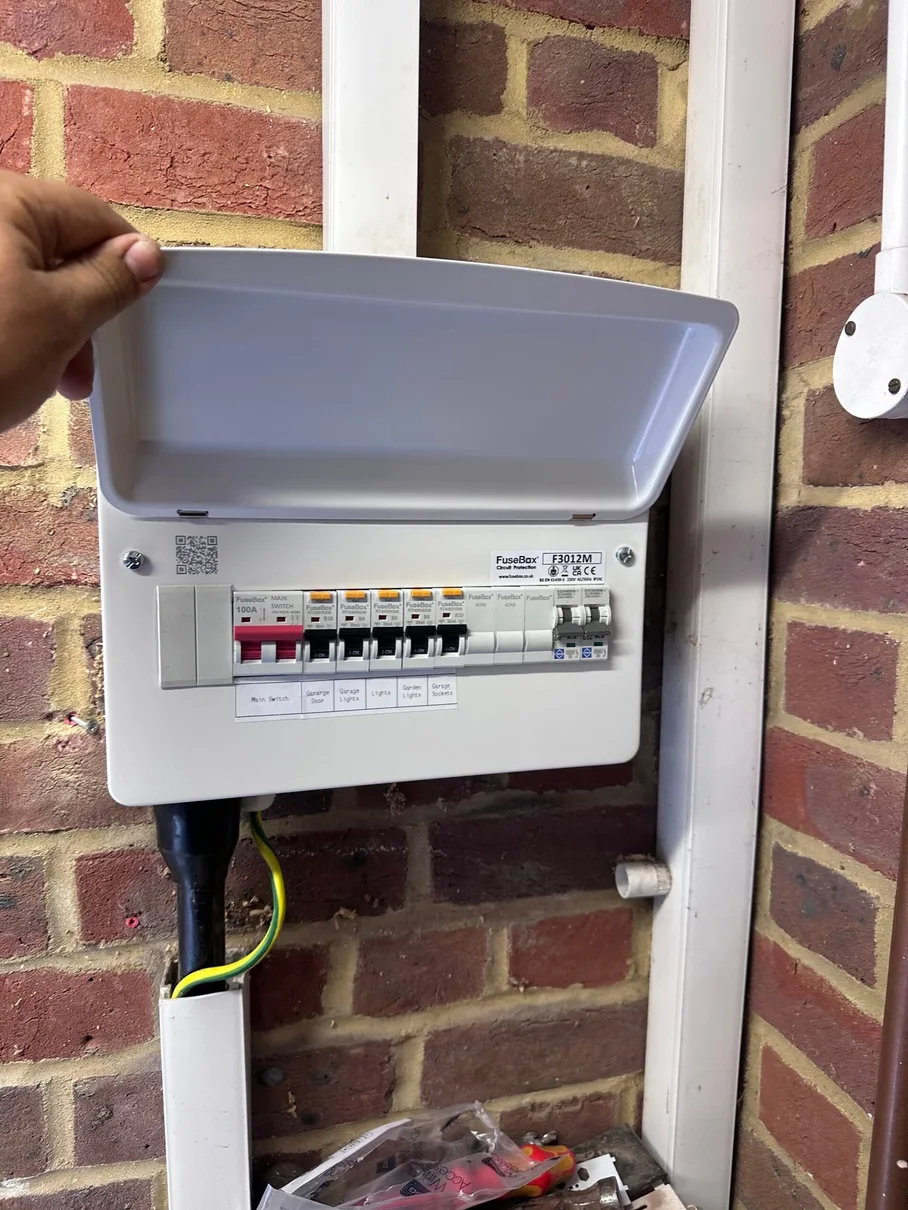
Installation examples from across North London — FuseBox & Wylex RCBO boards, fully certified.
Book Your Free Fuse Box / Consumer Unit Survey
Tell us about your Tottenham Hale property and we’ll arrange a free no-obligation survey — fixed price quotation after the scope is confirmed.
NICEIC Registered
Consumer-unit replacements are designed, installed and tested to the current requirements of BS 7671, with the applicable electrical certificate and Building Regulations documentation.
Fixed Price Quote
Free site survey, written quotation after the survey — no hourly billing, no surprise extras. From £800 standard, £950 premium, £1,200 large boards.
Planned Installation
Many standard consumer-unit replacements can be completed in one planned visit. Circuit faults, access or remedial work can extend the timescale and isolation period.
From £800
Standard 5–7 way RCBO board from £800. Premium 8–12 way from £950. 16+ way large-property boards from £1,200. HMO compliance pack quoted bespoke.
Signs Your Tottenham Hale Property Needs a New Fuse Box / Consumer Unit
Six tells we look for in Tottenham Hale fuse-box surveys. If two or more apply, a board replacement is usually the right call — not a repair.
Tripping that won’t reset
If your RCD trips and resets briefly then drops again the same evening, that’s a fault on a circuit — not a fuse box that just “needs a swap”. We isolate it during the install so the new board doesn’t inherit the same fault.
Burning smell or scorch marks
Brown discolouration around the main switch or burning plastic smell from the meter cupboard means heat damage at the consumer unit. Stop using high-load appliances and call us — this is a same-day priority job.
Wirewound or rewireable fuses
Old porcelain fuse holders with rewireable wire, or cartridge fuses with no MCBs at all, mean the board is from before 1980 and has zero RCD protection. EICR will fail it on C2; insurers may refuse claims.
Failed EICR or insurer refusal
C1 or C2 codes for “no RCD on socket circuits”, “outdated consumer unit”, or “non-compliant with current standards” are all board-level fixes. Send us the EICR and we’ll quote remedial work without a survey.
HMO licensing inspection
AFDD requirements depend on the installation, the current requirements of BS 7671 and any property-specific HMO licence conditions. An HMO inspection may identify additional circuit protection required by the installation design or licence conditions. The board and protective devices must be selected for the individual property.
Frequent appliance damage
If your TV, fridge, or boiler PCB has died more than once in the last few years, that’s typically a Type 2 SPD problem — older boards have no surge protection. New install adds SPD as standard.
How We Replace Your Fuse Box / Consumer Unit
Professional install from start to finish. Many standard consumer-unit replacements can be completed in one planned visit; circuit condition, access and remedial work can extend the timescale.
Initial Assessment
We check your incoming supply, earthing arrangement (TT vs TN-C-S), circuit count, RCD/SPD status, EICR history if any, and confirm whether AFDDs are required (HMO sleeping rooms). The survey is free with no obligation and you get a written written quotation after the survey.
Isolation & Removal
DNO main fuse pulled with permission, existing tails isolated, old board removed cleanly. We cap and label every circuit before disconnecting so reconnection is methodical, not guesswork. No live working at any stage.
New Unit Installation
Modern consumer unit (FuseBox, Wylex, Hager or Schneider) fitted with new 25mm meter tails, 100A main switch, full RCBO protection per circuit, Type 2 SPD on the main bus, and AFDDs where required. Cables labelled and torque-checked.
Testing & Verification
Full BS 7671 testing: insulation resistance (every circuit), Zs / Ze loop impedance, RCD trip times, SPD verification, polarity checks, and earth fault path. Any pre-existing fault is logged and discussed before we re-energise.
Fault Finding (If Needed)
If a circuit fails testing on the new board (typically a hidden borrowed neutral or insulation breakdown on an existing run), we find and fix it the same day where possible. Most fixes add £80–£180; major issues are quoted before any extra work starts.
Certification & Handover
Electrical Installation Certificate issued, photographed install record, written labels inside the board, Building Control notification through our NICEIC registration, and a verbal walkthrough of the new RCBOs and SPD test buttons. 12-month workmanship guarantee starts on handover.
Fuse Box / Consumer Unit Replacement Pricing
Quick reference for Tottenham Hale homeowners. Fixed quotes given after a free site survey.
- ✓ New RCBO / Dual RCD consumer unit
- ✓ 100A main switch & 25mm meter tails
- ✓ Type 2 SPD surge protection
- ✓ Full BS 7671 testing & certification
- ✓ 12-month workmanship guarantee
- ★ 8–12 way full RCBO board
- ★ Individual circuit protection
- ★ Type 2 SPD & 100A main switch
- ★ FuseBox / Wylex / Hager premium unit
- ★ Priority install scheduling
- ✓ 16+ way full RCBO board
- ✓ Individual circuit protection
- ✓ Type 2 SPD & 100A main switch
- ✓ Full circuit schedule documentation
- ✓ 12-month workmanship guarantee
Consumer Unit Upgrade Planning for Tottenham Hale Property Types
Four property situations that change access, testing and the practical scope in Tottenham Hale.
Swipe to explore all property types
Victorian & Edwardian Terraces
📍 Ferry Lane, Hale Road, Tottenham Hale High Street, Watermead Way
How is the right consumer unit chosen for Victorian & Edwardian Terraces? The visible ways and labels on an old fuse box do not confirm the real circuit count, condition or loading, so a standard package cannot be chosen safely from a photograph alone.
For Victorian & Edwardian Terraces, planning around high-density access planning means circuit zones and longer routes are traced before deciding board size, labelling and the protective-device arrangement. This prevents the replacement from being based on a generic package or an unreliable old label. The written scope follows the checked layout around Ferry Lane.
1930s–1960s Semis & Council Properties
📍 Stonebridge Lock, River Lea, Northumberland Park, Down Lane
Will existing circuit faults be found before 1930s–1960s Semis & Council Properties is transferred? Older alterations, shared neutrals or unidentified conductors can affect an RCBO upgrade. These need to be found before circuits are moved, not after the new board is already in place.
Before RCBO protection is added for apartment circuit schedules in 1930s–1960s Semis & Council Properties, shared supplies, borrowed neutrals and circuit ownership are resolved before individual RCBO protection is connected. Any defect found by testing is scoped separately instead of being hidden by the board change. The written scope follows the checked layout around Stonebridge Lock.
Post-War Flats & New Developments
📍 Hale Village, Bruce Grove, Tottenham, Northumberland Park
How long will the power be off in Post-War Flats & New Developments? The shutdown depends on safe access, circuit count and faults found during testing. We plan the isolation around the people and equipment that will be affected.
For shared-service isolation affecting Post-War Flats & New Developments, the isolation plan identifies who authorises access and which occupied or communal services must remain available. That keeps the power-off period tied to a verified circuit plan and the people affected by it. The written scope follows the checked layout around Hale Village.
HMO & Multi-Occupancy Properties
📍 Throughout Tottenham Hale N17 — HMOs, bedsits, shared houses. See all our Haringey fuse box / consumer unit work
What will the new board and handover look like for HMO & Multi-Occupancy Properties? A neat enclosure still needs usable labels, appropriate spare capacity and documents that match the circuits actually connected. Appearance and technical handover are planned together.
An upgrade allowing for work-from-home loads in HMO & Multi-Occupancy Properties starts with one clear boundary: labels and certification distinguish the installation upgraded from any communal or separately controlled equipment outside the scope. The documents then describe the installation actually completed rather than a standardised assumption. The written scope follows the checked layout around Throughout Tottenham Hale N17.
Need a fuse box upgrade for your Tottenham Hale property?
Nearby North London areas we cover for fuse box / consumer unit replacement
Consumer Unit Upgrade Questions for Tottenham Hale
Property-specific questions for Tottenham Hale, followed by practical answers about consumer unit replacement.
Haringey consumer units coverage · North London consumer units
My Tottenham Hale new-build flat already has a consumer unit — why would I need it replaced?
Most Hale Village flats and Hale Wharf developments were wired between 2010 and 2020 with developer-spec dual-RCD boards — typically a 12-way or 14-way unit fitted to a tight build budget. The board itself is usually fine, but the spec is at its limit: both RCDs are loaded close to 80% headroom, the spare ways are gone, and any added other high-load equipment, heat pump or smart-home gear has nothing to feed off cleanly. Replacing it doesn't fix a fault — it gives you the headroom to actually use the flat in 2026 terms. If your kitchen circuit nuisance-trips when the dishwasher and induction hob run together, that's not a wiring fault, it's the dual-RCD topology hitting its limit.
Developer wired my Tottenham Hale flat with dual-RCD — is that actually compliant?
Yes, compliant on the day it was built — dual-RCD boards meet BS 7671 17th Edition and the early 18th Edition, which is what Hale Village flats from 2010-2017 were wired to. Where it goes wrong: a single 30 mA RCD covering 5-6 final circuits means one fault — borrowed neutral, leaky immersion, a failing heater — trips half your flat. Modern the current edition of BS 7671 best practice is full-RCBO (one device per circuit). Existing dual-RCD boards aren't unsafe and don't fail an EICR for the topology alone, but they're the most common cause of 'whole-side-of-the-flat just died' calls we get from Hale Village.
other high-load equipment T-offed from my meter tails in Tottenham Hale — is that legal?
Short answer: not compliant, and it's an EICR fail. Tapping an other high-load equipment off the meter tails between the cutout and the consumer unit means the charger isn't protected by the consumer unit's RCD, and the new future high-load equipment circuit isn't part of the certified installation. We see this on Hale Village basement bays where an future high-load equipment installer has done a fast retrofit without involving the building's main electrician. Correct route is a dedicated way on the consumer unit, with Type B RCBO (or Type A depending on the charger's DC fault detection), a Type 2 SPD on the main bus, and the install certified on its own EIC. Notification to UK Power Networks if the new load pushes the property past its supply rating.
What's the difference between RCD and RCBO consumer units? Which one do I need?
Both protect against electric shock and electrical fire. The difference is granularity.
- RCD consumer unit (typically dual-RCD): Two big trip switches, each protecting a group of circuits. If one circuit faults, the whole RCD group trips — you lose the kitchen, lights, and sockets together.
- RCBO consumer unit (one RCBO per circuit): Each circuit has its own combined trip switch. If the kitchen socket faults, only that circuit goes off — the rest stay live.
Why we recommend RCBO for most Tottenham Hale installs:
- Faster fault diagnosis — you know immediately which circuit is faulty
- Less disruption — one bad iron doesn't kill the whole upstairs lighting
- Better with modern electronics — RCBOs are more sensitive and reliable
When dual-RCD is fine: small flats with simple circuit layouts, properties on a tight budget, short-term landlord-let where cost beats convenience.
Cost difference: typically £150 between dual-RCD (£800) and full RCBO (£950). For most homeowners we recommend the RCBO upgrade — it pays for itself the first time a fault localises rather than killing half the house.
Do I really need a metal consumer unit, or is a plastic fuse box OK?
This is the most common scare we see in Tottenham Hale — the fear-driven upsell to landlords.
Honest answer: plastic fuse boxes fitted before 1 January 2016 are still legal and don't automatically fail an EICR. They were the standard at the time of fitting. They become a problem only when:
- The plastic enclosure shows signs of overheating or burn marks (genuine C2)
- The board has no RCD protection on socket circuits (the fail reason isn't the plastic — it's the missing RCDs)
- The original installation was non-compliant when fitted
Since 1 January 2016, all new consumer units in domestic properties must be made of non-combustible material (typically metal). This is a forward-looking requirement — your existing plastic fuseboard doesn't get retrofitted just because the rules changed for new installs.
What you should worry about: not the colour of the box. Worry about RCD coverage, the age of the wiring, whether the existing fuse box has been properly maintained, and whether your EICR has C1/C2 codes against the consumer unit specifically. If an electrician quotes you for "a metal consumer unit because plastic fails EICR" without that nuance — get a second opinion.
Do I need freeholder or block-management approval for a fuse box change in Tottenham Hale?
Yes — most Hale Village blocks (Newlon, Argent Related, GMV-managed properties) require written consent before any work touching the consumer unit, and several specify the work must be supervised or signed off by their nominated electrician at leaseholder expense. The lease usually sits this under 'alterations affecting the demised premises' or 'works to fixed wiring'. We submit the proposed scope (board type, RCBO arrangement, certification path) on a single PDF to the managing agent before booking the install. Approval typically takes 1-3 weeks. Skipping it can void buildings insurance and create a deeds-pack issue if you later sell.
Will my old wiring still work with a new fuse box?
Almost always yes. The new consumer unit is the brain; your existing circuits are the nervous system. We connect to your existing circuit cables — they don't get rewired.
What we test before we commit:
- Insulation resistance on every circuit (must be at or above 1MΩ; healthy 1990s+ installs typically read above 200MΩ)
- Earth continuity — needed for RCD/RCBO to work safely
- Loop impedance — the circuit's ability to clear a fault
If a circuit fails any of these tests, we tell you before we commit. Options:
- Single circuit fix (£100-£300) — repair the fault and continue
- Targeted partial rewire of just that circuit (£300-£600)
- Hold the upgrade and discuss whether a partial or full rewire is now better value
Common Tottenham Hale scenarios where wiring fails: 1950s-60s rubber-insulated cable in upstairs lighting circuits (Ferry Lane and Ferry Lane period properties), borrowed neutrals from DIY work, undersized cables on extension circuits.
We never "just power it back up" with a circuit that failed testing — that's how fires start. Honest tradeoffs only.
I've been quoted £800. What if extra issues come up during the install — does the price go up?
Honest answer: the £800 is fixed for the standard scope. Any extras are quoted upfront, never sprung on you mid-install.
What's covered in £800 (no surprise add-ons):
- The new consumer unit / fuse board (quality metal, 6-10 ways)
- RCD protection on socket and lighting circuits
- Re-terminating every existing circuit, properly labelled
- Full insulation, earth, and RCD testing on every circuit
- The Electrical Installation Certificate (EIC)
- Plaster patching with bonding plaster around the install
What CAN add to the price (we tell you before we start, with a fixed quote):
- Circuits failing insulation testing — we'll show you the readings, and you decide: targeted repair (£100-£300 per circuit) or hold the upgrade for a partial rewire conversation
- Incoming supply needs upgrading — rare; happens when adding heavy load like an other high-load equipment or heat pump. We tell you upfront if your supply is borderline
- You opt for the premium tier — £950 (RCBO every circuit + surge protection) or £1,200+ (larger split-load board)
What we never do: discover a "problem" mid-install and charge you for it without your sign-off first. If we find something during testing, work pauses until you've decided. No scope creep.
How do I check if my Tottenham Hale flat's supply can carry a heat pump or other high-load equipment?
Three checks. First — look at the main cutout fuse in the meter cupboard: it'll be marked 60A, 80A or 100A. Most Hale Village flats were energised with a 60A or 80A cutout, sized to the day-one circuit count and not a heat pump. Second — add up the new load with diversity applied: a 7 kW other high-load equipment is 30A continuous, an ASHP is typically 16-25A, and the existing kitchen ring is 32A. Three of those together can put a 60A cutout into trouble. Third — request a supply uplift from UK Power Networks if needed (their I&C team handles the application, usually free for residential up to 80A; over 80A is chargeable). Don't assume your flat can take an other high-load equipment and heat pump just because the consumer unit has spare ways.
Smart-home loads tripping my new Tottenham Hale consumer unit — what's the fix?
Most often it's cumulative earth leakage from multiple Class I (earthed) smart devices on a single 30 mA RCD — Wi-Fi routers, smart TVs, induction hobs, other high-load equipment, and consumer electronics each leak a small amount to earth (around 0.5-1 mA). Add them up across the 5-6 circuits on one RCD in a Hale Village dual-RCD board and you cross 30 mA cumulative — the RCD trips even with no actual fault. Fixes, in order: move high-leakage devices to a different RCD bank; or replace the dual-RCD board with a full-RCBO unit (one device per circuit means leakage is per-circuit, not cumulative). The RCBO route is permanent; the rebalance is temporary.
Will the new consumer unit be ready for an other high-load equipment, heat pump, or smart home?
Yes — and we set up Tottenham Hale consumer units for it as standard. What we include:
- Spare 32A way on the fuseboard, labelled and ready for a 7kW or 22kW dedicated high-load circuit installation
- Adequate supply headroom — we check your incoming supply and tell you upfront if a heat pump or other high-load equipment needs a supply upgrade (often the headroom is fine, but worth confirming)
- SPD (surge protection) on the premium tier (£950) — protects every modern electronic in the house from voltage spikes
- Smart-home-ready circuits — neutrals to switch positions if you specify (most period houses don't have these, blocking smart switch installs later)
What gets retrofitted later costs more. Adding extra circuits to an existing fuse box later — chasing walls, lifting floor coverings, isolating the supply again — is more disruptive and costs more than specifying spare ways during the consumer unit upgrade itself, which is marginal cost only.
Tell us at the survey stage what you might add in the next 5 years — future high-load equipment, heat pump, hot tub, garden room, second other high-load equipment, home office. We size the board around your plans, not just your current circuits.
Will the consumer unit upgrade damage my walls or decoration?
Almost never. Unlike a rewire, a consumer unit replacement is contained to the meter cupboard — usually under the stairs, in a hallway recess, or in a kitchen cupboard. The work stays in that one spot.
What we do during the install:
- Disconnect existing circuits at the old fuse box, label every cable
- Remove the old fuseboard from its mounting point
- Mount the new consumer unit in the same position (same screw holes where possible)
- Re-terminate every circuit into the new board
- Test, certify, and label every circuit on the new unit's chart
What we don't do:
- Chase walls
- Lift floorboards (unless an existing cable is too short to reach the new connection point — rare)
- Disturb skirting, sockets, or switches anywhere else in the house
- Affect any decoration outside the meter cupboard
The only plaster work: if the new board is a different physical size than the old one, we may need to patch a small area of bonding plaster around the mounting position. That's included; finishing coats and any decoration are a decorator's job.
Tottenham Hale properties with the original fuse box in a tight under-stairs space sometimes need a little extra work to fit a wider modern board — we'll show you the position before we start so you can decide whether to keep it where it is or relocate.
Need a Fuse Box / Consumer Unit Replacement in Tottenham Hale?
Professional fuse box replacement and consumer unit installation across Tottenham Hale N17 / N17 and surrounding areas of the London Borough of Haringey. Free site survey, fixed prices, fully certified the current edition of BS 7671.