
Home Network & WiFi
Installation in Walthamstow Village E17
Weak WiFi, dead zones or an unreliable connection in Walthamstow Village? We survey historic & character houses and victorian homes in the village, then install the right mix of discreet cabling and access points so the rooms and workspaces that matter stay reliably connected.
NICEIC-Registered Electrician D609991 · 15+ Years Experience · Fully Insured · 5-Star Rated on Google
Your Home Network Worries Answered in Walthamstow Village
Worried about visible cables, another WiFi system that still does not reach, replacing existing equipment or losing internet during the work? Here is what we check and agree before installation.
Will network cabling be visible or make a mess?
Routes agreed before work starts
We agree every cable route, drilling point and visible section before installation starts. Where practical, we use lofts, cupboards, floor voids or discreet containment, protect the working area and leave it tidy. If part of a route must remain visible, you see and approve it first.
Will this actually fix the weak WiFi in the rooms I use?
Weak rooms tested and designed for
We test the rooms and devices that are struggling, check the incoming broadband connection and identify what walls, floors or distance are affecting coverage. The access points and wired connections are then positioned for those real weak areas rather than based on a theoretical WiFi range.
Will I need to replace my broadband router and existing equipment?
Keep compatible equipment where practical
Not automatically. We check whether your existing router, switches and connected devices can remain, then recommend only the equipment needed for the agreed result. The proposal also distinguishes a weak in-home network from an incoming broadband-speed problem that new WiFi equipment cannot correct.
Will my internet be off while the new network is installed?
Changeover planned around your household
There may be a short planned interruption when new equipment is connected and the network changes over, but installing the cable routes does not normally require the broadband to remain off. We agree the changeover timing, then reconnect and test the important wired and wireless devices before handover.
WiFi & Network Problems We Solve in Walthamstow Village
Choose the situation closest to your property to see how we improve weak coverage, unreliable rooms and difficult cable routes.
Historic & Character Houses
Finish-sensitive routes
For homes where cable visibility must be discussed before any installation begins.
Victorian Homes in the Village
Coverage across solid walls
For front-to-rear layouts where dense construction creates distinct signal zones.
Conservation-Area Conversions
Approval-aware proposals
For flats in the Village, designated 1967, and Orford Road, 1990 — both carry Article 4 directions removing householder permitted development.
Outbuildings Behind Period Homes
Low-impact external links
For studios needing a dependable connection without an improvised surface cable.
Home Network and WiFi Installation in Walthamstow Village E17
Walthamstow Village is a tightly bounded conservation pocket of E17 — Orford Road, The Drive, Church Lane, Vestry Road — with a property mix of Tudor, Georgian, and Victorian houses, several of them Grade II listed and many with original lath-plaster walls. Network installs here are bespoke every time. We cannot chase brick or plaster, surface trunking visible from the street usually needs conservation officer approval, and original light positions and ceiling roses need to be left alone.
Local insight: Walthamstow Village's conservation status means we can't chase brick or plaster, and surface trunking often needs conservation officer approval — which is exactly why every network here is planned around the property's constraints, not a standard install.
What we do instead: we route CAT6 through floor voids, lift one or two boards in each room rather than chase, and conceal access points and routers inside original chimney breasts or stair voids where the listing permits it. Surface conduit, when unavoidable, is matched to the era — matt finish, painted to match the wall behind, never run on a street-facing elevation without sign-off. We cover Walthamstow Village as part of our wider home network & WiFi installation service across Waltham Forest. For general electrical work in this conservation pocket see our electrician Walthamstow Village page; we also serve the wider Walthamstow E17 area.
A discreet home network in Walthamstow Village underpins related installs — smart home devices need WiFi for cloud control, CCTV needs it for live streaming (and conservation-friendly camera placement is a separate brief), smart lighting needs it for scenes and dimming, and any other high-load equipment with app features needs reliable Wi-Fi at the parking spot.
- 📱Smart home — cloud control & automation
- 📹CCTV — reliable live streaming & recording
- 🔌other high-load equipment — Wi-Fi coverage ready for app control if you add one
What Our Customers Say About Us
Real reviews from homeowners in Walthamstow Village E17. Live Google reviews below — for all 388+ reviews across Google, Checkatrade and MyBuilder, see our testimonials page →
Our Home Network Installations
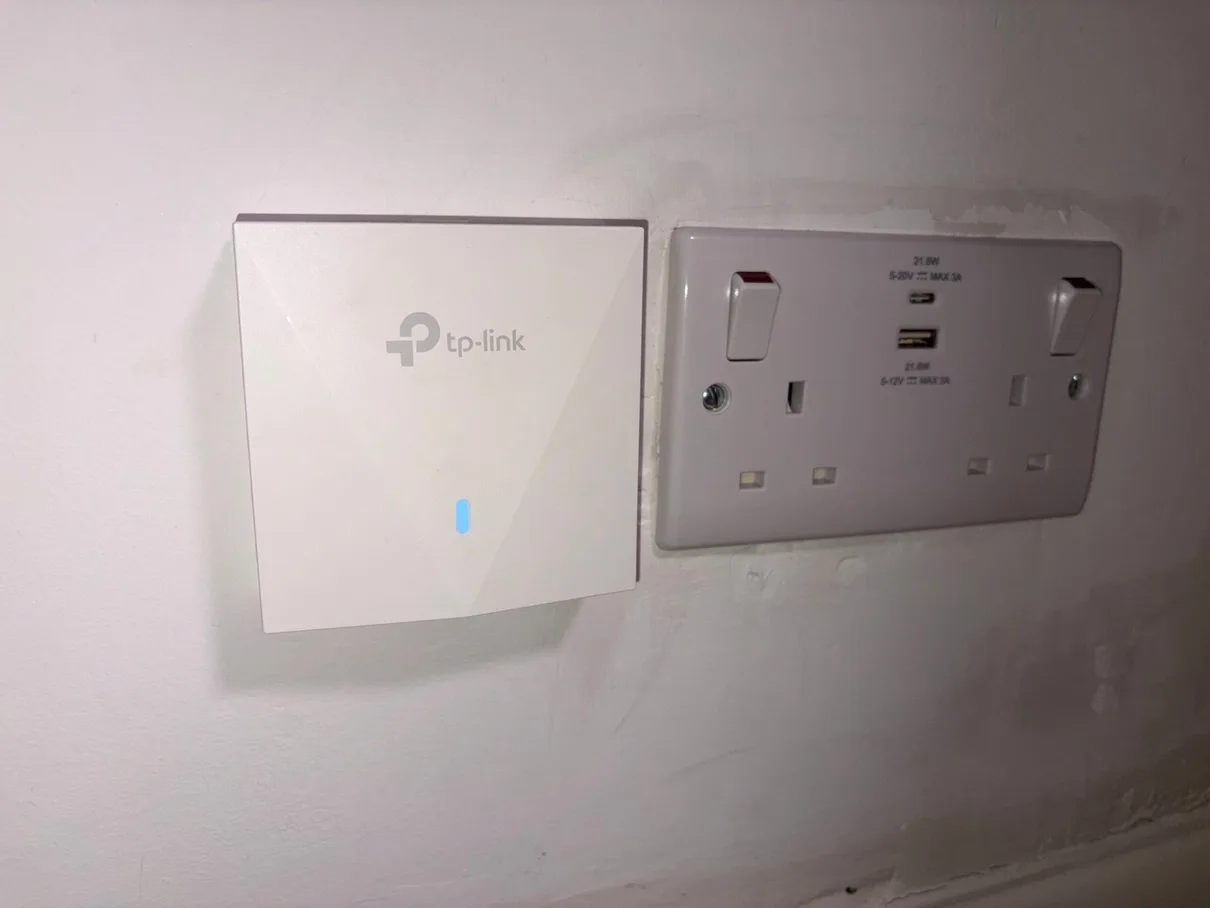
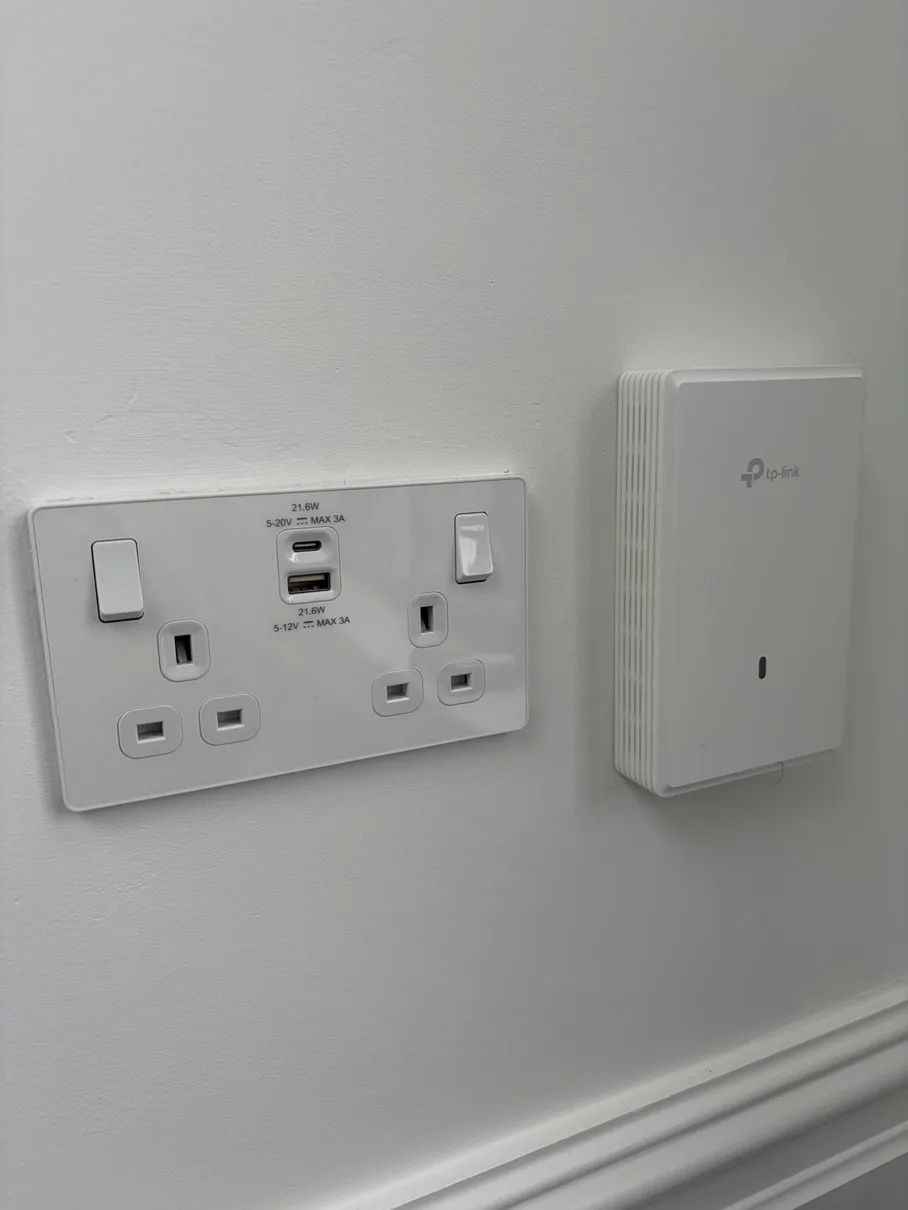
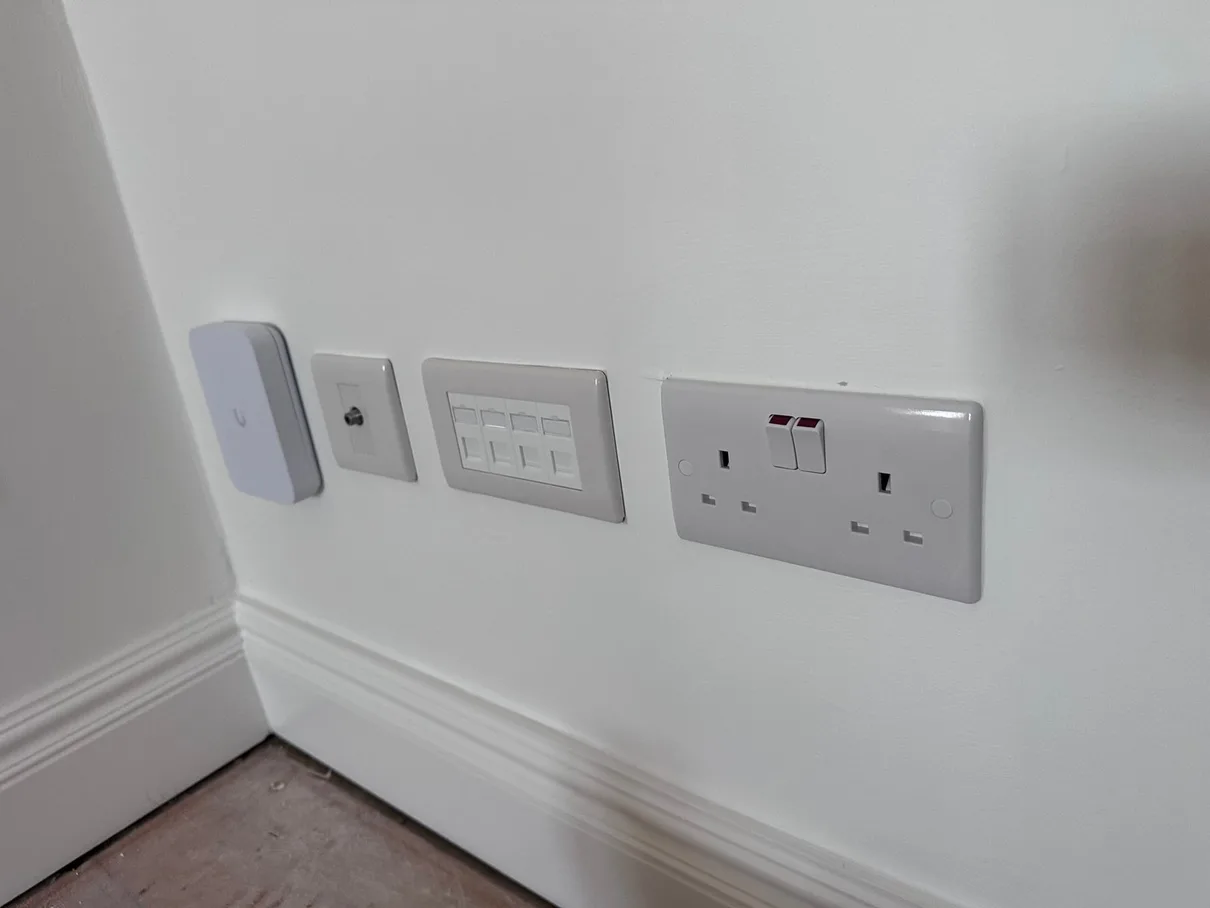
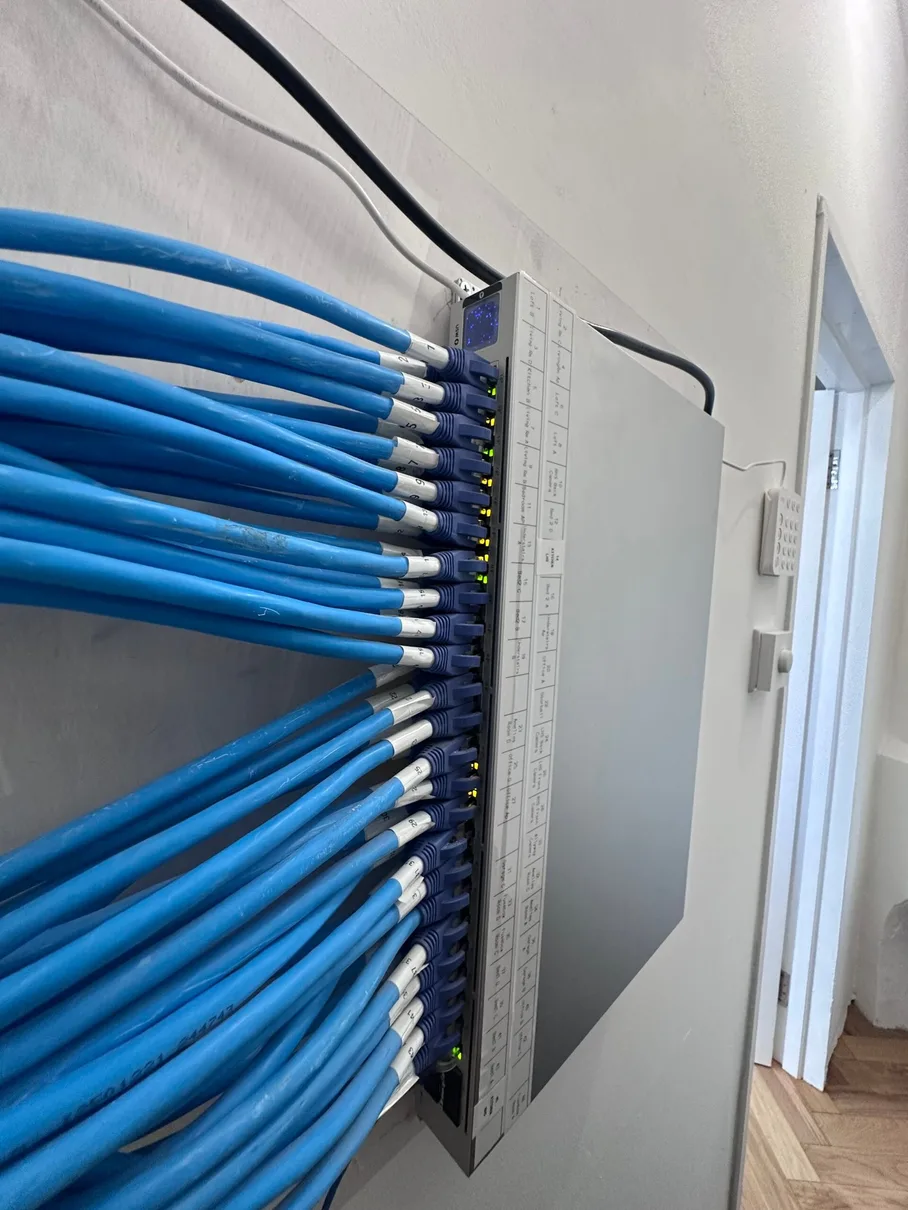
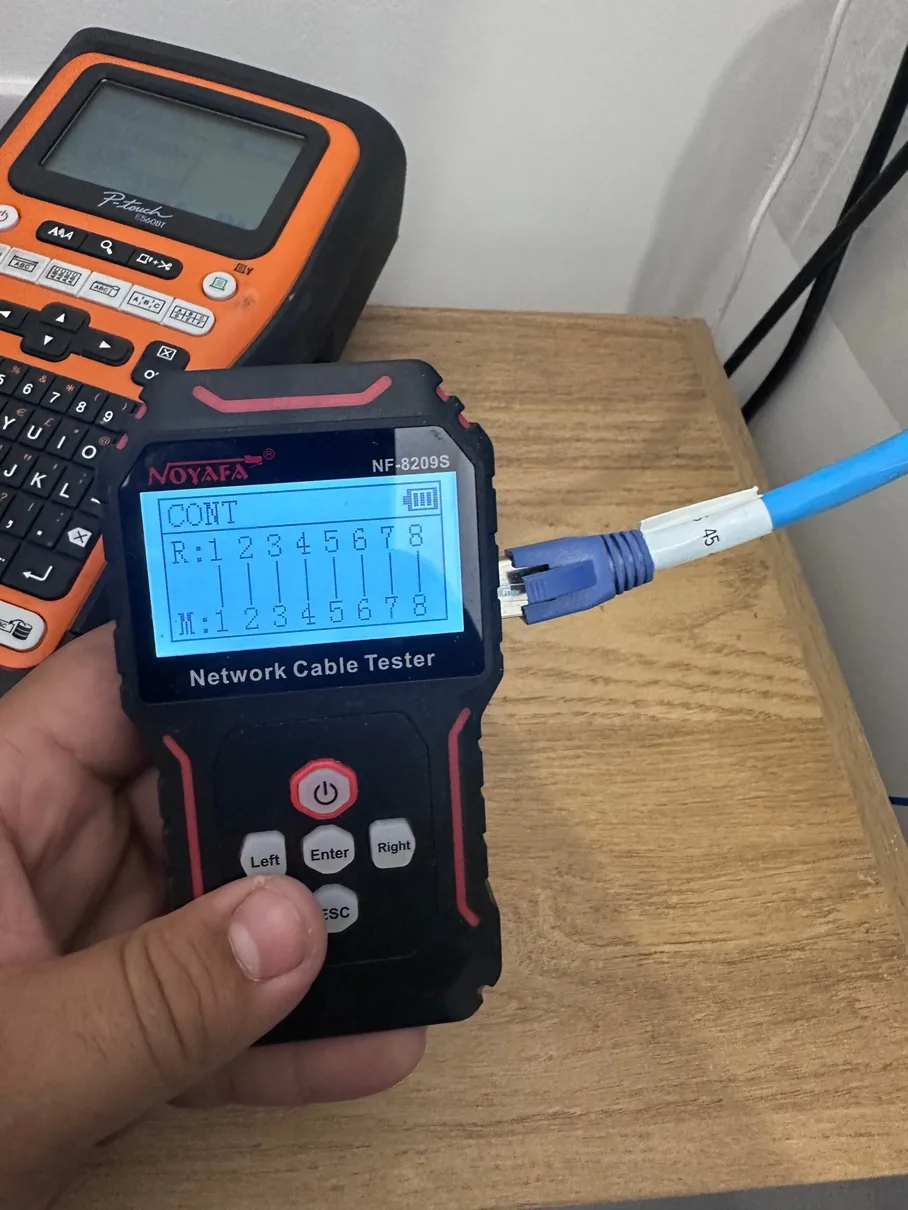
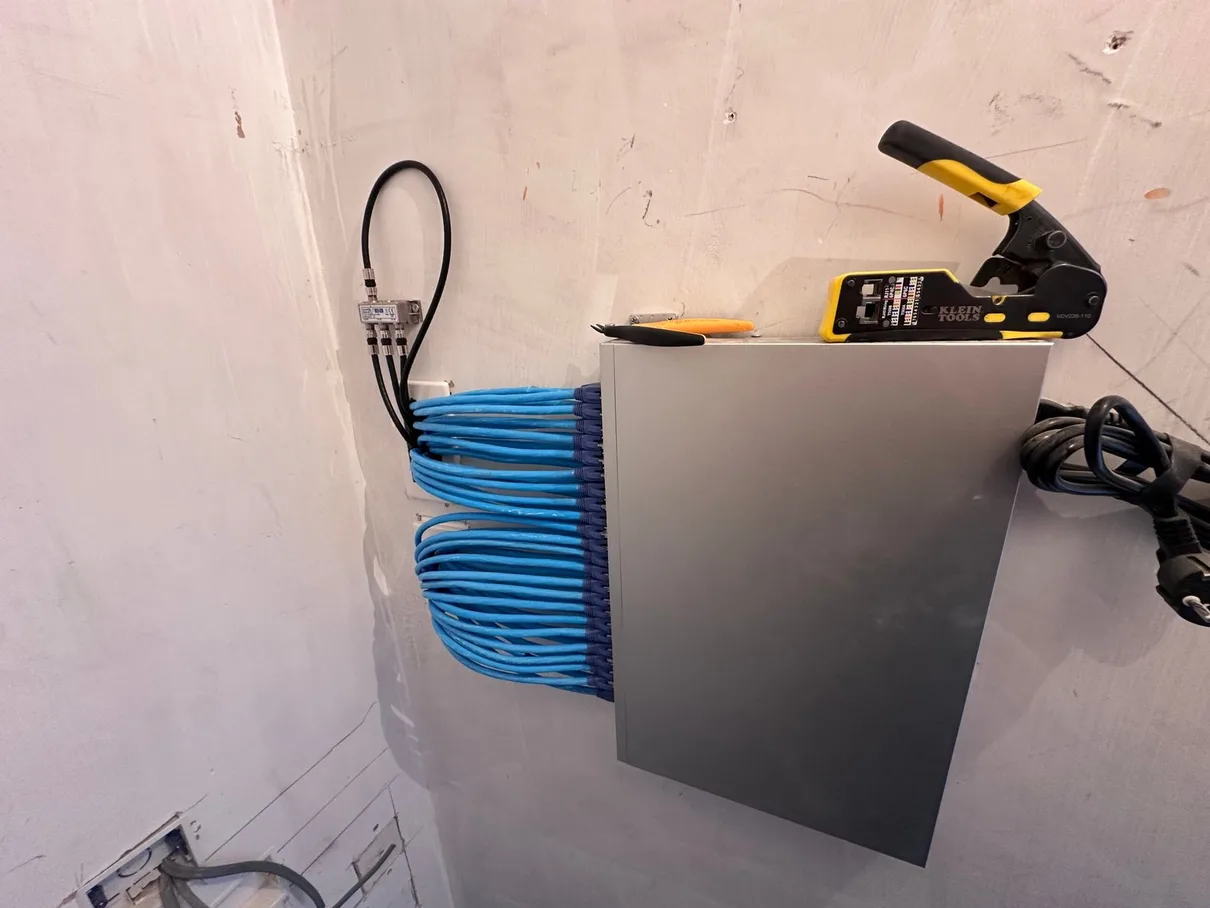
Real CAT6, WiFi and structured network installs across North London — tested, labelled and tidy.
What Can We Install in Your Walthamstow Village Home?
A properly designed home network is fast, resilient and segmented for security. Here's the stack I build for Walthamstow Village E17 homes and home offices.
Multi-Gig Structured Cabling
Cat6 runs to the rooms that need wired connections, with Cat6a available where full-distance 10-gigabit capability is required, terminated to keystone RJ45 wall sockets and a patch panel. Rated for 2.5G and 10G, so multi-gigabit internal transfers and NAS access are possible where the cabling run and connected equipment support them. Every drop tested for connectivity and labelled.
WiFi 6E / WiFi 7 on Wired Backhaul
Ceiling and wall access points hardwired back on Cat6a — not daisy-chained mesh hops that halve your speed. One SSID, fast roaming across every floor and the garden, and full throughput in the rooms that used to drop. WiFi 6E and WiFi 7 ready.
VLAN Segmentation & Firewall
Separate, firewalled networks for Main, Work, IoT, CCTV and Guest. Firewall rules control exactly what can talk to what — so correctly configured firewall rules can restrict IoT devices from reaching work devices and file storage. This is the single biggest security upgrade most homes are missing.
CCTV & IoT on Isolated Networks
Your cameras, doorbell, smart bulbs and plugs live on their own VLAN — able to do their job, walled off from everything else. Cameras record to the NVR without touching the internet or your main LAN. PoE means one Cat6a run powers each device, no wall-warts.
Managed Gateway & Switching
A proper gateway and PoE-managed switch (Ubiquiti UniFi or TP-Link Omada) replaces the ISP all-in-one, which goes into bridge mode. Single-pane management, per-device controls and remote monitoring — so I can support and tune your network without a call-out.
Network Rack, Patch Panel & Handover
Everything terminated neatly in a wall-mounted rack — gateway, switch, patch panel and power in one tidy spot. You get a labelled patch panel, a network diagram and documented VLANs, so any future work is quick and clean.
Home Network & WiFi Packages
Quick reference for Walthamstow Village homeowners. Fixed quotes given after a free site survey.
- ✓ Access point install or upgrade
- ✓ Optimised channels & one strong SSID
- ✓ Full-speed WiFi where you use it
- ✓ Ideal for flats & smaller homes
- ✓ Structured Cat6 to the key rooms
- ✓ WiFi 6E/7 access points on wired backhaul
- ✓ Managed 2.5G switch, multi-gig ready
- ✓ Tested & labelled cabling
- ✓ Everything in Whole-Home Wired, plus:
- ✓ VLAN segmentation — IoT, CCTV, guest & work apart
- ✓ Managed gateway, firewall & secure VPN
- ✓ Network diagram & documented handover
How We Complete Your Home Network Installation
A clear, six-step process — from free survey to a tested, documented handover.
Free Site Survey
We visit your property to assess layout, construction, and usage requirements. We identify optimal cable routes, access point locations, and discuss your connectivity needs in detail.
Custom Design & Quote
We create a bespoke network design with cable plans, equipment specifications, and a detailed written quote covering labour and all materials. No hidden costs.
Cable Installation
Professional CAT6 cabling installed through walls, ceilings, and voids. We use proper cable management, trunking where needed, and protect your property throughout.
Termination & Testing
All cables are terminated to professional RJ45 sockets or patch panels. We test every connection for continuity and negotiated link performance against the installed cabling and connected equipment.
Equipment Setup
If you're having WiFi access points or network equipment installed, we configure everything for optimal performance — including SSID setup, security, and clean handover between access points.
Testing & Handover
Full system testing, speed verification, and demonstration. You receive documentation, WiFi passwords, and guidance on managing your new network infrastructure.
Book Your Free Home Network Site Survey
Tell us about your property and what you need — we'll respond during working hours to discuss the scope and prepare a written quotation.
TP-Link Omada & Ubiquiti UniFi Specialists
We install and configure professional TP-Link Omada and Ubiquiti UniFi Wi-Fi 6 / Wi-Fi 6E systems — enterprise-grade WiFi and managed switching sized for homes and small businesses.
NICEIC Registered
Network cabling is tested and labelled at handover. Any associated electrical work is inspected, tested and supplied with the appropriate certification where applicable.
Full Setup & Testing
Every cable tested for connectivity, WiFi configured and optimised, and everything handed over working before we leave. 12-month workmanship guarantee. Manufacturer hardware warranties vary by product and supplier — we'll confirm these in your quote.
Fixed Price Quotes
From £99 per network point. No surprises — we agree the full price before any work begins.
Property-Specific Network Planning in Walthamstow Village
Four property and usage patterns that affect cable routes, access-point positions and equipment choices in Walthamstow Village. The cards compare Historic & Character Houses, Victorian Homes in the Village, Conservation-Area Conversions, Outbuildings Behind Period Homes because construction, ownership and room use change the correct network design.
Swipe to explore all property types
Historic & Character Houses
📍 Orford Road, Church Lane, near the Ancient House E17
For homes where cable visibility must be discussed before any installation begins. Can WiFi be improved without spoiling period details? Solid construction, tall floors, original finishes and limited service voids can block radio coverage while also restricting where new cabling can be concealed.
Prioritise lofts, cupboards and existing routes, and agree any unavoidable containment or external section in advance. We compare loft, cupboard, floor and discreet external routes, then place wired access points beyond the main obstructions and agree any visible containment before work begins.
Victorian Homes in the Village
📍 Vestry Road, The Drive, side streets off Orford Road
For front-to-rear layouts where dense construction creates distinct signal zones. How can an E17 period home avoid a chain of extenders? Solid construction, tall floors, original finishes and limited service voids can block radio coverage while also restricting where new cabling can be concealed.
Use wired access points placed on the useful side of the main signal barriers. We compare loft, cupboard, floor and discreet external routes, then place wired access points beyond the main obstructions and agree any visible containment before work begins.
Conservation-Area Conversions
📍 Conversion flats above Orford Road, side streets within the village boundary
For flats in the Village, designated 1967, and Orford Road, 1990 — both carry Article 4 directions removing householder permitted development. What should be checked before cabling a Village conversion? The telecoms entry point, neighbouring WiFi, permitted cable routes and the boundary between private and communal fabric can matter more than the size of the property.
Keep work internal where possible and provide a route proposal where freeholder or planning constraints may apply. We test coverage inside the home, keep routes within the private area where possible, document any permission-dependent section and separate household, guest or managed-device traffic when the equipment and brief require it.
Outbuildings Behind Period Homes
📍 Garden offices throughout the conservation area
For studios needing a dependable connection without an improvised surface cable. How can a Village outbuilding be connected neatly? Distance, outdoor exposure, electrical separation and the need for dependable upload as well as download performance make a repeated indoor WiFi signal a poor design assumption.
Select a protected route and termination method around the garden and building fabric, then install a local access point inside. The route is measured for protected copper or fibre, with suitable containment, termination, earthing considerations where applicable and a local switch or access point sized for the devices in the separate space.
Need a better network in Walthamstow Village?
Home Network & WiFi Questions for Walthamstow Village
Answers for Walthamstow Village properties, followed by practical questions about cabling, access points and managed networks.
Waltham Forest home network coverage · North London home networks
Can you segment my network with VLANs so IoT, cameras and work devices are kept apart?
Yes — this is the core of how I design networks. I put your main devices, work devices, smart-home/IoT gear, CCTV and guests on separate VLANs, then set firewall rules controlling exactly what each can reach. It means a cheap smart plug or camera can never see your laptops, and guests never touch your LAN. Done properly with a managed gateway and switch (UniFi or Omada), it costs nothing extra when it's designed in from the start.
Why does putting smart-home gear and CCTV on their own VLAN actually matter?
Cheap IoT devices, budget cameras and smart bulbs are the weakest security link in most homes — they rarely get firmware updates and are a well-known entry point for attackers. Putting them on an isolated VLAN with firewall rules means that if one is ever compromised, the damage stops at the VLAN boundary and can't spread to your PCs, phones or work files. It's the biggest security gap in most Walthamstow Village homes, and it's invisible until it isn't.
Do you run wired backhaul or mesh for the access points, and why?
Wired backhaul wherever the cabling allows — each access point hardwired on Cat6a back to the switch. Wireless mesh repeats the signal and roughly halves throughput at every hop, which is why mesh far-rooms feel slow. Wired APs give you full speed in every room, clean fast roaming on one SSID, and no compounding latency. Mesh is my fallback only where a cable genuinely can't be run.
Can you get me multi-gig speeds internally, and does my broadband need to be fast for that to matter?
Yes — Cat6a plus 2.5G/10G switching gives you multi-gig between your own devices, which matters for NAS access, backups, large file transfers and multiple 4K streams regardless of your broadband. Your internet speed only caps traffic going out to the internet; a fast, well-built LAN speeds up everything happening inside your home. When you do upgrade to full-fibre, the network's already ready for it.
Ubiquiti UniFi or TP-Link Omada — which do you install and why?
Both — I design around your needs and budget. UniFi has the more polished ecosystem, superb dashboards and huge community support; Omada delivers the same managed-network fundamentals (VLANs, firewall, PoE, single controller) at a lower price point. For a security-focused segmented network, either does the job well. I'll recommend the right fit rather than pushing one brand.
Can you bridge my ISP router and run a proper firewall and gateway instead?
Yes. Most ISP all-in-one routers are weak at segmentation and firewalling. I put the ISP unit into bridge or modem-only mode so it just passes the connection through, then run a proper gateway that handles routing, firewall rules, VLANs and VPN. You keep your existing broadband and phone service — you just get a far more capable and secure core.
Do you set up guest WiFi that genuinely can't reach my devices?
Yes — a separate guest network on its own VLAN with client isolation, so visitors get internet only and can never see your computers, NAS, printers or smart-home gear. It's ideal for guests, holiday-let tenants or tradespeople, and you can share it with a simple password or QR code without exposing anything on your main network.
Do you test and document the cabling?
Every Cat6 run is tested for connectivity, terminated to a labelled patch panel, and I hand over a network diagram showing the VLAN layout and what's plugged where. As a qualified electrician I also install any power and containment to regulations. It means the install is verified working to spec, and any future changes are quick because everything is labelled and documented.
Can you put my CCTV and NVR on an isolated PoE camera network?
Yes — cameras and the NVR go on their own PoE camera VLAN, powered over the same Cat6a that carries their data, so there are no separate power supplies at each camera. The cameras record locally to the NVR and are firewalled off from the internet and your main LAN, which is both more secure and more reliable. I can integrate UniFi Protect, Reolink, Hikvision and most ONVIF systems.
Can you give me secure remote access back to my home network?
Yes — a VPN into your gateway lets you reach your home network, cameras and files from anywhere without exposing anything to the open internet. Modern gateways from UniFi and Omada support this natively, so you get encrypted remote access without opening risky ports. Handy for checking cameras, accessing your NAS, or working securely while away.
WiFi 6E or WiFi 7 — is it worth it, and what do I need to benefit?
It's worth it if you have recent devices and want headroom. WiFi 6E adds the clean 6GHz band (far less congestion in a busy street like Walthamstow Village), and WiFi 7 adds even wider channels and higher throughput. To benefit you need compatible client devices and — most importantly — the access points wired back on Cat6a, otherwise the backhaul becomes the bottleneck. I'll advise honestly whether it's worth it for your kit.
What does a design-led network install cost, and how long does it take?
Simple jobs start from £99 — a single access point install or swap-and-commission. A full design-led network with structured cabling, managed switching, access points and VLAN segmentation is quoted after a free site survey, because it depends on property size, number of drops and cable routes. Most homes are completed in one to three days with minimal disruption, and you get the written fixed quote before any work starts.
Will this fix dropped Zoom and Teams calls when I work from home?
Yes — dropped video calls are usually a WiFi coverage or contention problem, not your broadband. A wired connection to your home-office desk, or a WiFi 6E/7 access point on wired backhaul nearby, gives your work devices a stable, low-latency link that doesn't compete with the rest of the house. Most people working from home in Walthamstow Village notice the difference immediately — no more freezing mid-meeting.
Can you reduce lag for online gaming?
Yes. Lag and jitter come from congested WiFi and long mesh hops. A wired Cat6a run to the console or gaming PC gives the lowest, most consistent ping; where a cable isn't possible, a WiFi 6E access point on the clean 6GHz band keeps the gaming device off the congested 2.4 and 5GHz bands. On a managed gateway I can also prioritise gaming traffic so a big download never spikes your ping mid-match.
Will I get reliable 4K and 8K streaming in every room?
Yes — buffering is almost always a coverage or capacity issue. With WiFi 6E/7 access points wired back on Cat6a, the surveyed rooms can receive appropriately planned coverage, with capacity checked against the expected streaming load. For the main TV I'll usually run a dedicated wired point so the main stream does not have to compete for local WiFi airtime.
Need a Home Network in Walthamstow Village?
Professional CAT6 structured cabling and mesh WiFi installation in Walthamstow Village E17 and surrounding North London areas including Edmonton, Enfield, Palmers Green, Southgate, Wood Green, Winchmore Hill, Chingford, and more. Free site survey, fixed prices, fully tested and labelled on completion.